TRIVIA 360: Quiz Game
- 4.4
- Rating
- 10.00M
- Installs
- Free
- Price

 Analysis by App-foxy
I opened TRIVIA 360 expecting a quick quiz to fill a few spare minutes, and that is exactly where it makes the most sense. It is a free trivia game from Smart Owl Apps, built for single-player and multiplayer play, with a simple question-and-answer loop that gets you moving almost immediately. You read a question, choose an answer, see how you did, and decide whether to continue while the next challenge is still fresh in your mind.
That straightforward design is both its biggest strength and its main limitation. I never had to learn a complicated control scheme or spend time arranging a team before playing. At the same time, people looking for a deep campaign, a strong story, or a highly specialized learning tool may find the experience lighter than expected. For casual knowledge testing, however, it is an easy game to pick up and put down.
How the quiz loop feels in everyday use
I find the quiz loop easiest to enjoy when I give each short session a purpose—careful reading, a friendly head-to-head challenge, or simply a few minutes of curiosity. That small choice helps keep the repeated question-and-answer rhythm lively instead of turning it into automatic tapping. From there, the practical question is what to check when a round feels interrupted or the app does not respond as expected.
You May Also Like

 AccuWeather: Weather Radar
AccuWeather Review: A Quick, Clear Forecast for Everyday Decisions
For everyday plans, the best forecast is the one you can understand quickly. AccuWeather makes rain timing, radar, and local conditions easy to act on, with a few trade-offs.

 Hill Climb Racing
Why Hill Climb Racing Still Turns Crashes Into One More Run
A tiny car, a bumpy hill and one more upgrade: Hill Climb Racing keeps resurfacing because its simple chaos makes every near-miss feel personal.

 AliExpress - Shopping App
AliExpress Makes Global Shopping Feel Personal, but Shoppers Bear the Risk
AliExpress turns a global marketplace into a pocket-sized discovery engine. Its reach is useful, its shopping loop compelling, and its trade-offs easy to miss.

 Lords Mobile: Kingdom Wars
Lords Mobile Is a Kingdom-Building Routine, Not a Quick Match
A case-by-case verdict on the building, battles, device demands, and social commitments that make Lords Mobile rewarding for some players and exhausting for others.

 PDF Scanner app - TapScanner
TapScanner Makes Paperwork Easier to Capture, Check, and Share
TapScanner makes scanning with a phone feel less like a rescue operation and more like a dependable step in getting work done. Its capture tools are useful, though not flawless.

 Block Blast!
 Shows How Much a Puzzle Game Can Leave Out
A quiet grid game shows why puzzle players increasingly value instant clarity, repeatable skill and low-pressure play—and where the genre still needs to catch up.
More From Our News Desk
View All News


The first question gets you playing quickly
The first useful thing about this game is how little preparation it demands. I can start a round when I am waiting for an appointment, taking a short break, or sitting with friends who want a quick challenge. There is no need to understand a long ruleset before making the first move. The central action is familiar: read the prompt, compare the possible answers, and tap the one that seems right.
That may sound basic, but trivia games often lose their appeal when menus and setup get in the way. Here, the value comes from the immediate decision. Even when I know the answer, I still have to resist rushing and check the wording carefully. When I do not know it, the game turns the moment into a small gamble between recognition, elimination, and intuition.
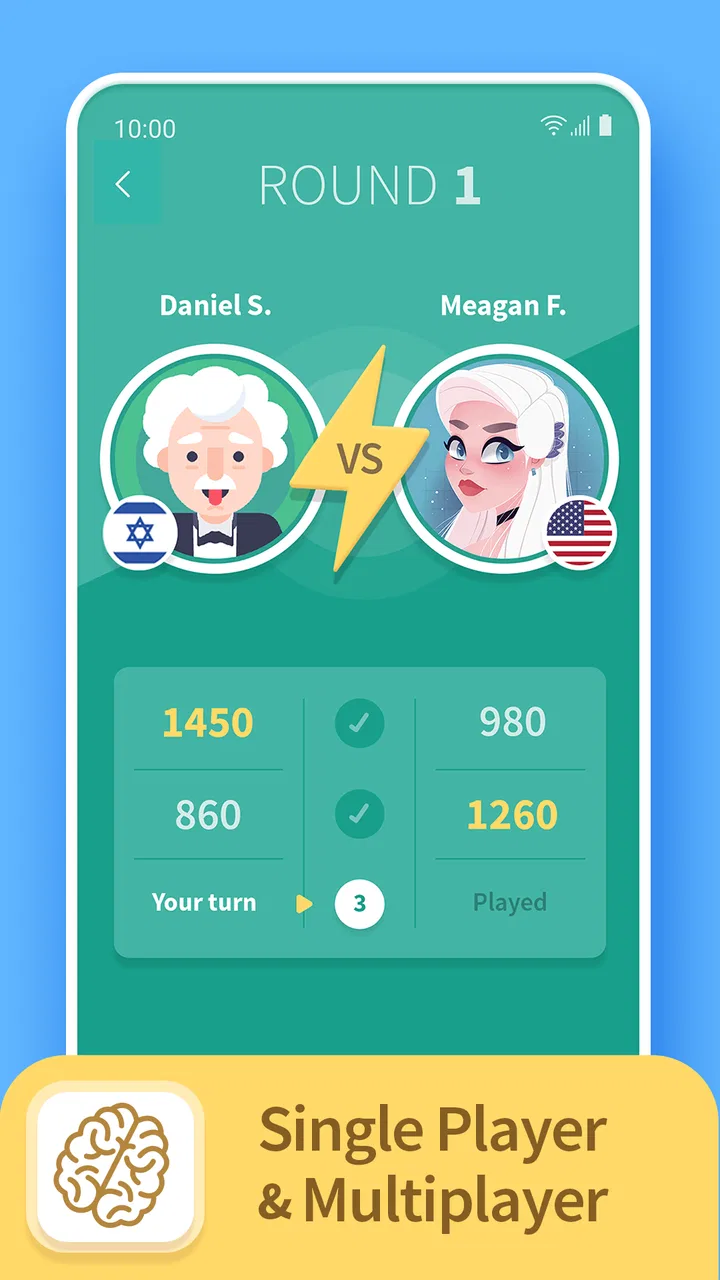
The single-player option works particularly well for short, irregular sessions. I do not need to reserve a long block of time, and I can stop after a small run of questions without feeling that I have abandoned a larger adventure. The multiplayer option gives the same basic quiz idea a more social use, especially when several people want something lighter than a full board game.
One practical tip is to treat the first few questions as a warm-up rather than as a test of your intelligence. Trivia covers many areas, so an early miss may simply mean the subject is outside your experience. I found that playing with a calm approach makes the feedback more useful: instead of chasing a perfect result, I pay attention to which kinds of questions repeatedly catch me out.
Answering is simple, but the wording matters
The controls are approachable enough for a broad audience, including players who do not usually spend time with mobile games. That also makes the game suitable for sharing with family members. The Everyone content rating supports that general accessibility, although a rating does not mean every question will be equally interesting to every age group or background.
My best results came from slowing down just enough to notice qualifiers in the question. Words such as “first,” “most,” “always,” or “often” can change the correct choice completely. This is a small but important habit because the game rewards careful reading as much as stored knowledge. If you are playing with another person, saying your reasoning aloud before selecting an answer can make the round more entertaining and reduce random guessing.
There is also a useful distinction between playing to win and playing to improve. In a competitive session, I want to answer quickly and protect my lead. Alone, I am more willing to choose the answer I genuinely believe and learn from the result. That second approach makes the game feel less like a score chase and more like a lightweight way to keep general knowledge active.
The feedback rhythm keeps the next question tempting
The core rhythm is easy to understand: action, result, and another decision. After I answer, the game gives me a clear sense of whether I was right or wrong, then the possibility of another question pulls me forward. That immediate feedback is important because trivia can otherwise feel like a series of disconnected guesses. Each response gives the current session a little shape.
A correct answer creates a small burst of satisfaction, but the wrong answers are often what make me continue. I want to see whether the next question fits a subject I know better. This is the reset point inside the loop: the previous result is finished, and the next prompt offers a clean chance to recover. The game does not require me to carry a complicated inventory or remember a long plot, so restarting mentally is quick.
I also like that the feedback can change how I approach the following question. If I have just missed something because I answered too quickly, I become more deliberate. If I have handled several questions confidently, I may take a calculated risk on a difficult one. That creates a modest but real tension between caution and momentum.
The trade-off is that this rhythm may feel repetitive to players who need constant novelty in presentation. The satisfaction comes from the questions and the social or personal challenge, not from elaborate animation or a changing world. I would choose this over a more decorative quiz when I want speed, but I would choose a richer game when I want a sense of progression beyond answering questions.
What counts as a reward here
In my experience, the main reward is not a large collection system or a story milestone. It is the combination of a better result, a correct answer to a question that looked difficult, and the desire to repair a weak performance. That makes the game easy to understand but also means the motivation depends heavily on whether you enjoy general trivia itself.
For a casual player, a good use is to set a personal goal before starting. I might aim to finish a short session without rushing, improve my accuracy in a familiar subject, or simply beat the result from the previous attempt. These goals make the feedback more meaningful without turning the game into homework. With friends, the reward becomes conversation: someone remembers an unusual fact, another person challenges an answer, and the round continues.
Because the game is free, it is easy to try without committing money first. Optional in-app purchases are listed at $1.99 per item, so anyone who prefers to keep spending at zero can approach it as a free casual game, while buyers should remember that optional purchases can change the overall cost if used repeatedly. I would not spend simply because I missed a question; the better value comes from learning your habits and deciding whether the basic experience already gives you enough entertainment.
One non-obvious way to get more from it is to use wrong answers as conversation prompts rather than treating them as failures. When playing with someone else, pause briefly after an unfamiliar result and explain why each person chose an option. This turns a fast quiz into a small shared knowledge exercise, and it works especially well when the group has different strengths.
Why another session begins
The reason to play again is the clean reset. A poor answer does not ruin a campaign, and a strong run does not close the door on a new challenge. I can finish one attempt, put the phone down, and return later without needing to remember a storyline or rebuild a complicated strategy. That makes the game a good companion for fragmented free time.
The reset also helps in multiplayer. A result can be accepted as one round rather than a permanent judgment about who knows more. Someone who struggled with one set of questions may do much better in the next session, and that possibility keeps the social experience friendly. If your group tends to turn every game into a serious contest, you may still want to agree beforehand whether speed, accuracy, or simply having fun matters most.
For solo play, I recommend changing the purpose of each return. One session can be about answering quickly, another about reading carefully, and another about identifying topics that expose gaps in your knowledge. This prevents the game from becoming a mindless tap-through routine. It also gives the reset a practical role: the next attempt is not only another score, but a chance to test a different approach.
There is a limit to this design. If you want a carefully structured course that teaches a subject step by step, a dedicated educational app will usually be better. If you want a large competitive ecosystem with extensive rankings and long-term progression, another trivia platform may suit you more. This game is strongest when you want a compact question loop rather than a permanent hobby with layers of management.
Who will enjoy it most
I would recommend it to people who enjoy general-knowledge questions, quick decisions, and low-pressure mobile entertainment. It is also a sensible choice for households that want a game simple enough to explain in a minute. The combination of solo and multiplayer modes lets the same installation serve different situations: a private break during the day and a shared challenge later.
It is less suitable for someone who dislikes uncertainty or feels frustrated when questions jump between unrelated subjects. Trivia is inherently uneven. You may feel brilliant in one moment and completely lost in the next, not because the game has changed your ability but because the topic has changed. Players who prefer predictable improvement should know that general quizzes can produce inconsistent results from session to session.
The game’s broad accessibility is helped by its modest technical requirement. It supports devices running Android 5.0 or later, and the current version is 2.5.0. That makes it relevant to people using older compatible phones, although the experience will still depend on how comfortable the device is in everyday use. I would check that your phone runs the supported system before planning to install it, particularly if you keep an older handset for casual gaming.
How it compares with common alternatives
Compared with a traditional pub quiz, this is more convenient and less dependent on finding a host, preparing questions, or gathering a large group. The cost of that convenience is atmosphere. A room full of people, spoken jokes, and team discussion creates energy that a phone screen cannot fully reproduce. The multiplayer mode helps bridge that gap, but it does not turn a mobile quiz into a complete social event by itself.
Compared with flashcard apps, the experience is more playful and less controlled. Flashcards are better when I want to review one subject repeatedly, track a study plan, or build a deliberate memory routine. This game is better when I want variety and a quick challenge without preparing the material myself. I would use both for different purposes rather than expecting one to replace the other.
Compared with story-driven mobile games, the appeal is immediate rather than narrative. There are no plot decisions for me to manage in the way a role-playing game might require. That makes it easier to fit into a busy day, but it also means there is less emotional investment once the novelty of the questions fades. The right choice depends on whether you want mental prompts or an alternate world to explore.
Its large audience suggests that the format has broad appeal: the game has more than ten million installs, a 4.4 average rating, and roughly one hundred twenty-five thousand ratings. Those figures make it look like a well-established casual option rather than an obscure experiment, but popularity should not replace personal fit. The important question is whether you enjoy the question-answer-reset cycle enough to return to it.
Small habits that improve the experience
My first suggestion is not to guess instantly when two answers look plausible. Read the full question again and identify what it is really asking. This takes only a moment, yet it reduces mistakes caused by answering the topic you expected instead of the question on screen.
Second, use multiplayer as a discussion format, not only as a race. Let each player explain a choice before the result appears. That makes obscure questions worthwhile and gives less confident players a reason to stay involved. It also reveals an interesting trade-off: the fastest player is not always the best reasoner, while the most knowledgeable player may lose points by overthinking.
Third, stop after a session that has reached the right size for your attention span. Because the next question is always easy to begin, it is tempting to continue after the fun has dropped. Ending while the loop still feels satisfying makes returning later more appealing. This is especially useful when using the game during work breaks, since a “quick round” can otherwise expand into a longer distraction.
Finally, keep expectations realistic about learning. You may remember a surprising answer, but the game is not a replacement for a structured course or reference source. I see it as a prompt for curiosity. When a question catches my interest, I can investigate it elsewhere; the quiz provides the spark, not necessarily the complete explanation.
My verdict on the complete loop
TRIVIA 360 succeeds because its loop is clear and repeatable. I take an action by choosing an answer, receive immediate feedback, enjoy the small reward of being right or improving my result, and get a clean reset that makes another session feel possible. That structure is simple enough for a spare minute and flexible enough for a casual multiplayer gathering.
Smart Owl Apps has kept the focus on accessible trivia rather than surrounding the questions with unnecessary complexity. The free entry point and Everyone rating make it easy to recommend as a trial, while the optional $1.99-per-item purchases are worth considering only if the extra value matters to your own play style. The game is available as a trivia title for Android users on a compatible system, with single-player and multiplayer use built into its identity.
My honest recommendation is to try it when you want a quick mental challenge, not when you are searching for a full educational program or a deep long-term game. If you enjoy the uncertainty of general knowledge and like seeing whether the next question can repair the last result, you will probably understand its appeal within a few rounds. If you need a strong story, specialized study tools, or elaborate progression, I would look elsewhere. For everyone in between, its greatest advantage is also its clearest promise: answer one question, learn how you performed, and decide whether one more is worth it.
FAQs for TRIVIA 360: Quiz Game
01What is TRIVIA 360 and how does it work?
TRIVIA 360 is a dynamic quiz game available on Android and iOS platforms designed to challenge your general knowledge across a wide range of topics. The game offers multiple-choice questions, true or false statements, and picture quizzes. Users can play solo or challenge friends, making it both educational and entertaining.
02Is TRIVIA 360 free to play, or are there in-app purchases?
TRIVIA 360 is free to download and play, but it includes optional in-app purchases. These purchases can enhance the gaming experience by unlocking additional categories or removing ads. Players can still enjoy the full game without spending money, making it accessible to everyone.
03What types of questions can I expect in TRIVIA 360?
TRIVIA 360 covers a broad spectrum of topics, including history, science, pop culture, sports, and more. The questions range from multiple-choice to true or false, and there are also picture-based quizzes. This variety ensures that players are constantly engaged and challenged.
04Can I play TRIVIA 360 offline, or do I need an internet connection?
While TRIVIA 360 requires an internet connection for certain features, such as updates and online challenges, many of its quizzes are available offline. This allows players to enjoy the game without data usage, making it convenient for travel or areas with limited connectivity.
05How does TRIVIA 360 handle user privacy and data security?
TRIVIA 360 is committed to protecting user privacy by adhering to standard data protection regulations. The app collects minimal personal information, primarily for account creation and progress tracking. It utilizes secure servers to store data, ensuring that user information is kept safe.
Pros
- Engaging questions across varied topics.
- User-friendly interface and navigation.
- Daily challenges to keep players engaged.
- Multiplayer mode for social interaction.
- Offline mode available for on-the-go play.
Cons
- Limited free content; in-app purchases needed.
- Ads can be intrusive during gameplay.
- Some questions lack detailed explanations.
- Occasional lag in multiplayer mode.
- No option to create custom quizzes.

TRIVIA 360: Quiz Game
Gallery